Charts in Microsoft Dynamics 365 are a very useful way to display data for
- quick
- high-level
- visual
analysis.
User can easily:
- create it
- delete it
- share it
- assign it
- export/import it

TOP 1 CRM BLOG
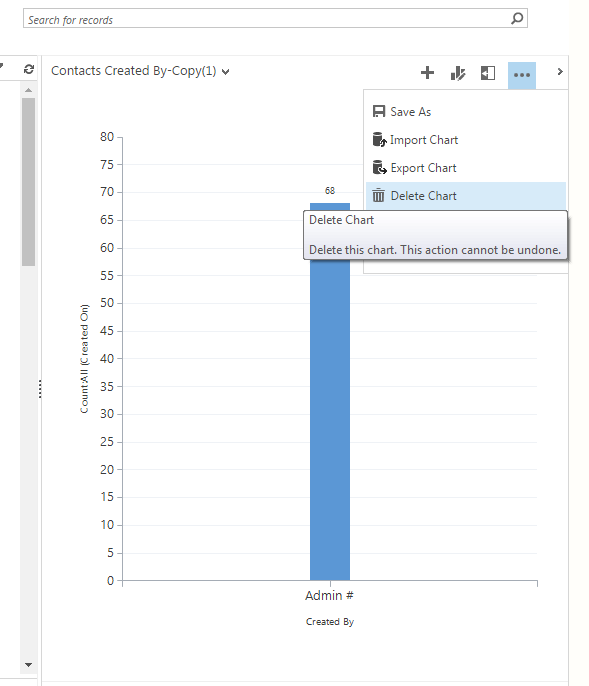
Charts in Microsoft Dynamics 365 are a very useful way to display data for
analysis.
User can easily:
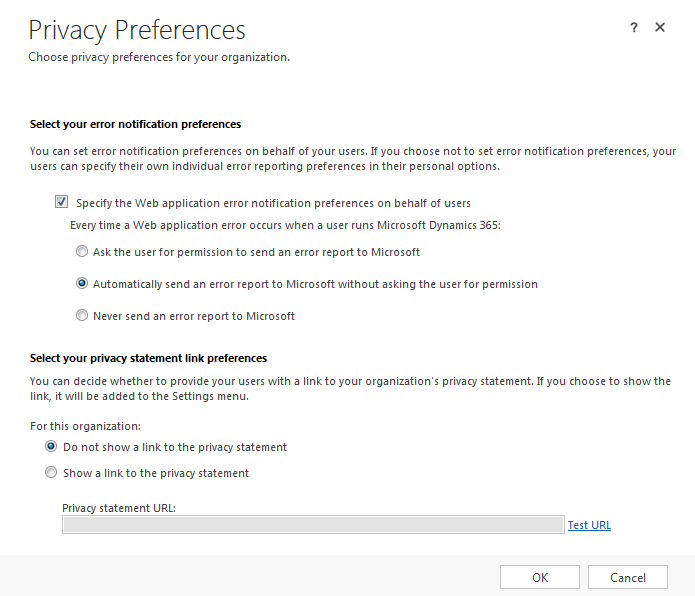
If you have any CRM presentations I would really recommend to disable the “Send Report to Microsoft” error pop-up. I saw users who were scared when they saw it. It is very easy to disable it.
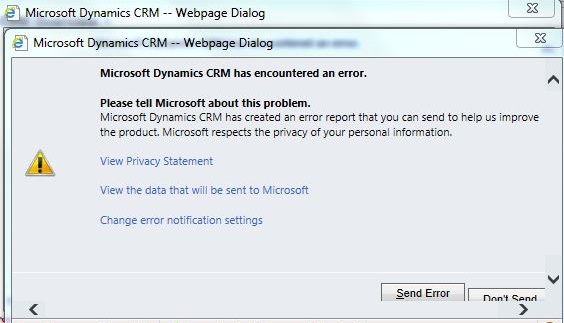
You can disable the Script Error Notifications in Dynamics 365 using following steps:
We have started very interesting discussion about it on Linkedin. Please look at this post. Here is url: https://www.linkedin.com/feed/update/urn:li:activity:6269476936607633408/
Other useful links:
https://community.dynamics.com/crm/b/crmtipsfromadeveloper/archive/2017/03/28/disable-the-script-error-notifications-in-ms-dynamics-crm-365
How to Disable the Script Error Notifications in Dynamics CRM 2015
If you have attended the increasingly popular CRM Saturday conference, you probably gained some valuable insights around the key aspects of delivering successful CRM implementations, and how to overcome the main challenges one may face during the implementation.
If not, I encourage you to visit the web site, it has great speakers, great content, and lots of networking opportunities… not to mention is one of the few Dynamics events out there where attendance is 100% free.
Two of the sessions were around test automation and how to implement a true DevOps strategy for Dynamics CRM, two key areas and best practices to increase the overall quality and healthiness of your CRM implementation, which, in turn, would give you the following benefits:
If you are still not convinced about why your team should unit test your code, here’s another blog post with the slides of the test automation presentation.
Once your team realises how important unit testing is, the next immediate question probably is:
“Ok, I have an implementation which has been running for years , and I have a bunch of existing code, not tested. At the same time, I have a limited set of resources and trying to unit test everything would be mad… where do I start?”
Ideally, one should achieve a code coverage above 90%, but if you have limited resources, my advice would be: the 80/20 rule.
Try to find the 20% of your code which represents at least the 80% of the total number of executions or executed time, just because if there is a bug in there, then it is likely to affect more users than a piece of code which is executed from time to time only (this might be actually more complex as maybe something than just runs from time to time may have a bigger impact based on a million different variables… but I hope you get the idea).
The next question might be…. how to measure it?
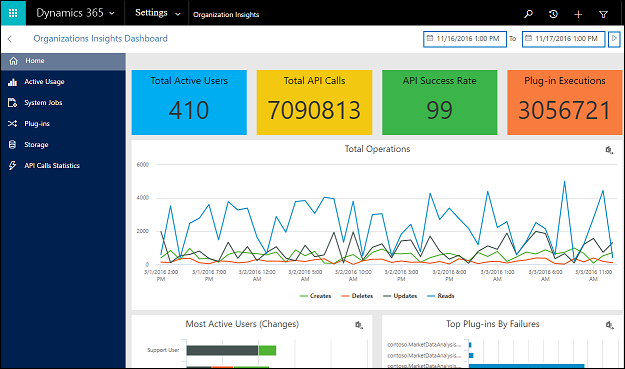
Well, it turns out, from a plugin / codeactivity perspective, you could extract that information from the System Jobs entity rather easily.
Every time a plugin / workflow is executed, a new entry in that table is created, with the Created On, Completed On, fields etc, so you could actually measure how much time a single workflow / plugin execution took. If you have an On-Premise installation, then that is just a SQL query with some groupings, if On-Line, then a data extract plus some Excel manipulation magic should be enough too or… make use of the great Organisation Insights feature in AppSource:
Are you unit testing your code? If so, how did you start unit testing legacy code? Did you use a different approach? We would love to know more about your own experiences.
Please leave a comment below.

Join the Dynamics AX User Group (AXUG) to engage 365 days a year with the largest, user-led community for companies using Dynamics AX and Dynamics 365.
AXUG provides a hub for thousands of AX user, partners and developers to exchange knowledge on how to best maximize product performance to achieve business success. Our resourceful community is powered by users, for users and specializes in the delivery of member-driven education and enriched networking – helping to boost competencies, confidence levels and connections for our members.



In the previous post we were asked by some readers about any other CRM events in Europe like CRM Saturday. Also one blog’ reader has asked us about CRM events particularly in Poland.
Like so far we identified the following CRM events in Europe:
As far I know there are not to many CRM events in Poland. We know about:
If you know anything about any other CRM’ events in Europe we would love to hear about it.
Thank you very much!

Microsoft Dynamics 365 and eBECS can help you move your business to the Cloud. The webinar will be about benefits of moving to the cloud. You can learn how:
You can register to this event using following url:

I was invited for Microsoft Tech Summit at Birmingham. It is very important for companies like TopOneCRM to constantly interact with Microsoft community. It will be a great pleasure for me to represent TopOneCRM on this event and connect with Microsoft engineering experts, technology partners and Microsoft’ community.
It is a two-day free technical training event where you can improve your cloud and infrastructure skills. More details you can find using following link – Microsoft Tech Summit 2016-17
Hopefully see you there!

I really enjoyed CRM Saturday at Microsoft in Paddington, London. Great day and very insightful sessions from all the speakers. Nice to see all the familiar faces again. I have finally met personally those who I have connected only on Linkedin or I have knows only their blogs e.g. Ben Hosking, Marius Agur Pedersen and many others.
It was fantastic well organised event with very informative sessions. I highly recommend CRM Saturday to all CRM professionals. It is a great occasion to see many colleagues from the Dynamics community. See you at the next one!
If you need more information about CRM Saturday 2017 please visit following links: